Take 5 Solo
15 minut dziennie • Progres bez presji
-
Watch the video and answer the questions with a specific number or name.
- What percentage of Americans plan to drink less alcohol this year?
- How much is the global beverage industry worth?
- How much are non-alcoholic drink sales expected to grow in the next three years?
- What type of drinks are becoming popular among Gen Z?
- What is one example of a non-alcoholic drink mentioned in the video?
-
- What percentage of Americans plan to drink less alcohol this year?
→ 49% of Americans say they plan to drink less alcohol this year. - How much is the global beverage industry worth?
→ The global beverage industry is worth around $250 billion. - How much are non-alcoholic drink sales expected to grow in the next three years?
→ Sales are expected to grow by $4 billion in the next three years. - What type of drinks are becoming popular among Gen Z?
→ Gen Z is becoming interested in fizzy juices and nostalgic sodas, like grape soda or red pop. - What is one example of a non-alcoholic drink mentioned in the video?
→ One example is the Phony Negroni.
- What percentage of Americans plan to drink less alcohol this year?
-
All of these words are used in everyday English, but some are more common in British English, some in American English, and some depend on region, age, or even family habits. Match the drink-related words with their definitions.
A mocktail is a non-alcoholic version of a cocktail. It looks and tastes similar to a real cocktail, but it contains no alcohol.
The word mock means “not real” or “made to copy something.” It’s often used for practice versions or fake versions of things.
For example:
• a mock exam is a practice exam, not the real one
• a mock interview is a practice interview
• a mocktail is a “fake” cocktail without alcoholToday, mocktails are becoming more and more popular, especially among younger people who want something fun and social without drinking alcohol.
In the video, there was a funny name for a mocktail: “Phony Negroni.”
It’s funny for two reasons: first, it rhymes, and second, it means exactly what it should mean.The word phony (also spelled phoney) means fake or not real.
So a Phony Negroni is a “fake Negroni” — it looks and tastes similar, but it has no alcohol.💬 Common phrases with phony:
a phony excuse – His excuse sounded really phony.
a phony person – I don’t trust him, he seems like a phony person.
a phony smile – She gave me a phony smile and walked away.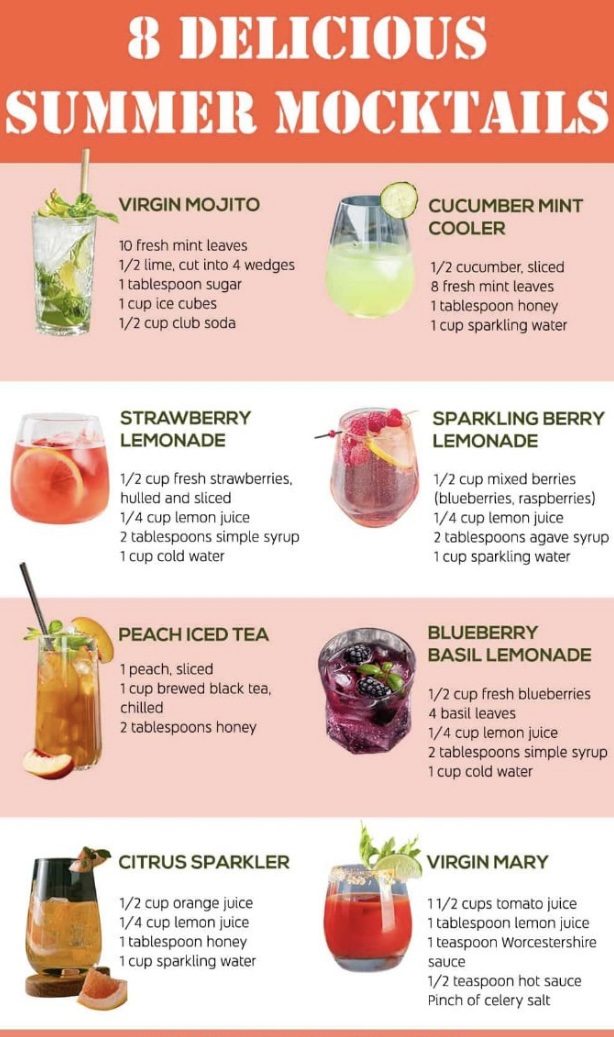
-
Now, with the growing mocktail trend, sales of non-alcoholic spirits, beer, and wine are expected to grow by $4 billion in the next three years
Passive reporting structures (is expected, is said, etc.)
We use structures like “is expected” when we don’t say who thinks something. It’s common in news, reports, and formal English. Instead of saying “Experts expect sales to grow,” we say:
→ “Sales are expected to grow.”
The focus is on the result, not the person.We often use this structure with verbs that describe opinions or beliefs. Very common ones are:
is expected, is said, is believed, is thought, is known, is considered, is reported, is predicted👉 examples:
- Alcohol consumption is expected to decrease next year.
- This product is said to be very popular.
- Online learning is considered to be more flexible.
- The company is reported to grow fast.
- This trend is predicted to continue.
Use one of the verbs: expected / believed / said / thought / considered / reported / predicted / known. Then complete each sentence with your own idea.
- Sales of non-alcoholic drinks __________ to ___________________________.
- Young people __________ to __________________________________.
- AI __________ to __________________________________.
- Remote work __________ to __________________________________.
- Social media __________ to __________________________________.
- Online shopping __________ to __________________________________.
- Learning English as an adult __________ to ____________________________.
- Life in big cities __________ to __________________________________.
-
Read the article and match the opinion to the person.
A = Sloane
B = Gabe
C = Harry
D = BelindaA Drink Too Far?
Four people share how they really feel about drinking.
A. Sloane, 55
I do enjoy a drink now and then — I’m not going to lie. Life’s already hard enough, so why not enjoy the small things? A good glass of wine just puts me in a better mood. I try not to go overboard, obviously, but I wouldn’t want to be completely sober all the time.
My husband and I have done wine-tasting trips all over the place — reds, whites, you name it. Funny thing is, our kids don’t drink at all. Total opposites. They’re super fit — my son plays tennis, my daughter’s really into athletics. It’s often considered strange these days to enjoy drinking regularly, especially among younger people. I honestly don’t know how they survive parties without a drink. Talking to strangers while sober? Not for me.
B. Gabe, 22
Honestly? Drinking is kind of… over. It feels like something older generations are still into. My friends and I are basically all teetotalers, and we’re fine with that. We don’t need alcohol to have a good time. Alcohol is considered unnecessary in modern social life. Why would I spend money getting tipsy in some loud bar full of random people? We’ve got everything on our phones — movies, music, people. Dating apps do the awkward part for you. My parents used to go out, get drunk, and hope to meet someone. That just feels unnecessary now.
C. Harry, 38
I’ve had a pretty complicated relationship with alcohol. At uni, I drank way too much — shots, pints, the whole thing. I was hungover (or properly hammered, to be honest) more times than I can count, and yeah… it definitely started to affect my life. At that time, drinking a lot was expected, especially at university.
At some point, I realised I was using alcohol to feel more confident. Without it, I didn’t really know how to talk to people. So I stopped completely for a while. These days, I still drink, but I’ve cut way down. Now it’s more about enjoying a drink, not getting drunk. A beer here and there, mostly at the weekend — quality over quantity.D. Belinda, 72
Alcohol has always been a bit complicated for me. My father was an alcoholic, and my late husband loved a drink too. Because of that, I avoided alcohol completely for years. I was totally sober for a big part of my life. But later on, I changed my approach. Now I enjoy the occasional drink — nothing too strong. I’m definitely a lightweight, so even one glass of wine can make me a bit tipsy. But I think that’s fine. Everything in moderation. It is often said that alcohol is dangerous, and yes, of course it can be. But so many things in modern life are harmful too. And honestly — how would I raise a glass to someone I’ve lost if I didn’t drink at all?
-
go overboard — przesadzić / posunąć się za daleko
→ I like parties, but I try not to go overboard with drinking.
→ Lubię imprezy, ale staram się nie przesadzać z alkoholem.sober — trzeźwy / niepijący alkoholu
→ She decided to stay sober for a few months.
→ Postanowiła nie pić przez kilka miesięcy.teetotaler — osoba, która w ogóle nie pije alkoholu
→ Most of his friends are teetotalers.
→ Większość jego znajomych w ogóle nie pije alkoholu.tipsy — lekko pijany / wstawiony
→ After one cocktail, I already felt a bit tipsy.
→ Po jednym drinku byłam już lekko wstawiona.hangover — kac
→ I had a terrible hangover after the wedding.
→ Miałem strasznego kaca po weselu.hammered — kompletnie pijany / schlany
→ He got absolutely hammered at the party.
→ Kompletnie się schlał na imprezie.lightweight — osoba ze „słabą głową”, która szybko czuje alkohol
→ I’m such a lightweight — one beer is enough for me.
→ Mam słabą głowę — jedno piwo mi wystarcza.lightweight — zawodnik wagi lekkiej / coś lekkiego
→ He used to compete as a lightweight boxer.
→ Kiedyś walczył jako bokser wagi lekkiej.
-
Aleksandra Deneka English State, NIP: 6292396171 | Polityka prywatności | Regulamin newslettera