

-
Conditionals – let’s make them easier!
Hi! 👋 Today we’re going to work on conditionals. If they sometimes get mixed up in your head, don’t worry – we’re going to take them step by step.
But first, let’s start with a short clip from Friends – one of my favourite TV shows and a show I watched a lot as a teenager when I was learning English.
Before you watch, there’s one word you need to know:
omnipotent /ɒmˈnɪp.ə.tənt/
adjective — having unlimited power; being able to do absolutely anything
Now watch the clip.
🎬 Can you understand the joke? 😊
-
The joke is based on a misunderstanding.
Ross says:
“If I were omnipotent for a day…”
But Joey doesn’t understand the word omnipotent. He thinks Ross says “I’m impotent.”
That’s why Joey is so surprised when Ross later says:
“I’m omnipotent.”
Joey understands it as “I’m impotent.” 😄
And there’s another interesting thing here: pronunciation.
Before grammar – a little bit of pronunciation
British or American?
The first sound in omnipotent is a little different in British and American English.
🇬🇧 British English: /ɒmˈnɪp.ə.tənt/
🇺🇸 American English: /ɑːmˈnɪp.ə.t̬ənt/In British English, /ɒ/ is a short sound. Your lips are slightly rounded and the sound is closer to a short “o”.
In American English, /ɑː/ is more open. Relax your lips and open your mouth a little more. It sounds closer to “a”.
Listen to the audio and practice with me
It doesn’t really matter which form you choose. What matters is practising your pronunciation and learning to hear the difference between sounds. You can even treat it as a bit of fun – play around with the sounds. 😊
Word 🇬🇧 British English 🇺🇸 American English hot /hɒt/ /hɑːt/ coffee /ˈkɒf.i/ /ˈkɑː.fi/ problem /ˈprɒb.ləm/ /ˈprɑː.bləm/ honest /ˈɒn.ɪst/ /ˈɑː.nɪst/ podcast /ˈpɒd.kɑːst/ /ˈpɑːd.kæst/ Finally, the conditionals!
In the Friends video, did you notice the conditionals?
There are several examples of the second conditional in the Friends clip:
“If I were omnipotent for a day, I would want world peace…”
“If I were omnipotent for a day, I’d make myself omnipotent forever.”
“What would you do if you were omnipotent?”
Why is the second conditional so useful?
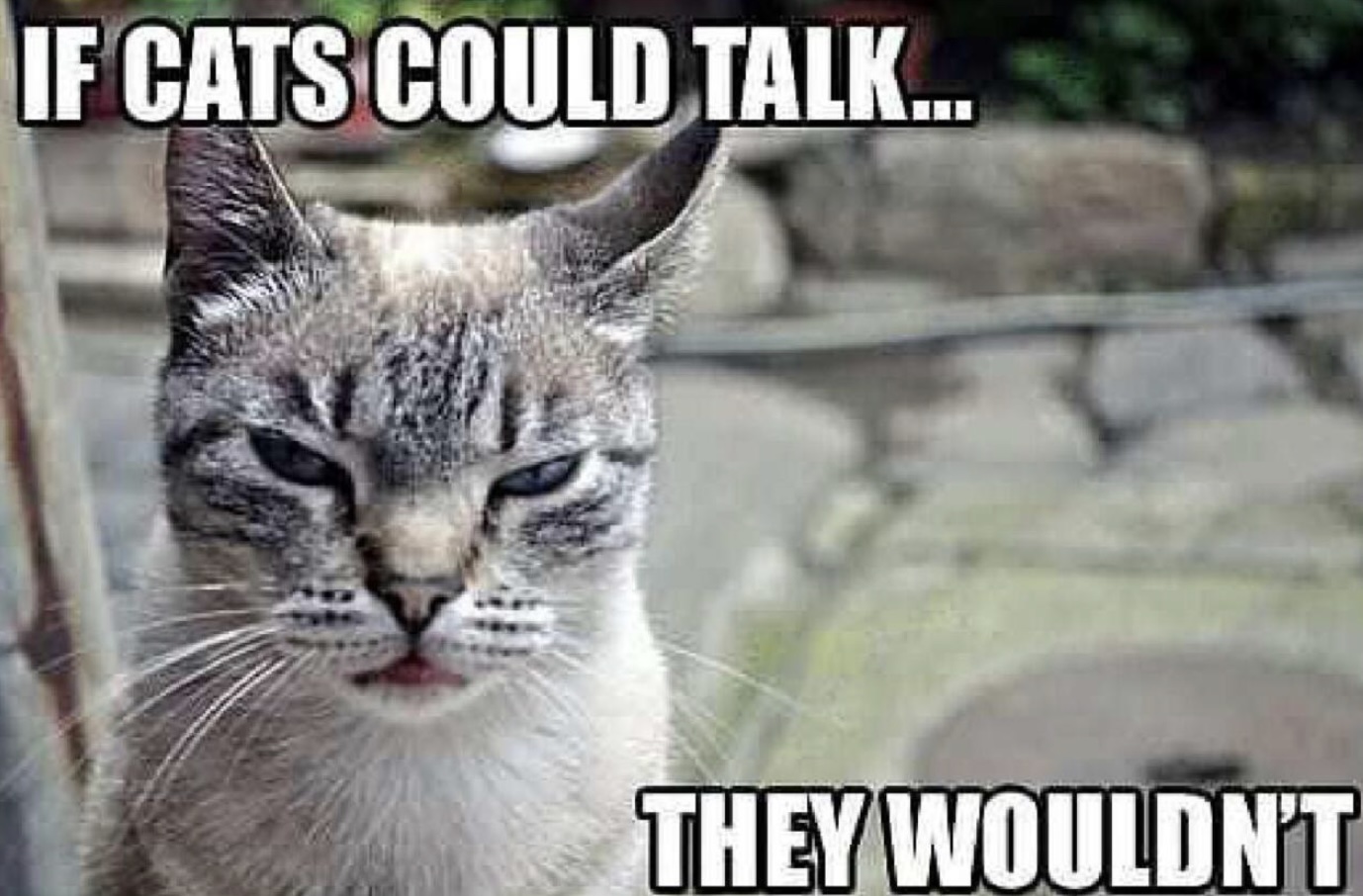
We use the second conditional when we imagine a situation that is not real now or is unlikely to happen.
It’s perfect for talking about dreams, imaginary situations, difficult choices and “what if?” questions.
But wait… there are more! 👀
The second conditional is only one of four main conditionals in English:
Zero Conditional • First Conditional • Second Conditional • Third Conditional
1
2

3

4

So, how do conditionals work?
ZERO CONDITIONALIf + Present Simple → Present SimpleIf I drink coffee late, I can’t sleep.Is it always / generally true?Facts, rules and things that normally happen.FIRST CONDITIONALIf + Present Simple → will + verbIf it rains tomorrow, we’ll stay at home.Is it a real possibility?Something that can really happen in the future.SECOND CONDITIONALIf + Past Simple → would + verbIf I had more money, I’d travel more.Are we imagining it?Imaginary or unlikely situations in the present or future.THIRD CONDITIONALIf + Past Perfect → would have + Past ParticipleIf I had left earlier, I would have caught the train.Are we imagining a different past?The past can’t change — we’re imagining what could have happened differently.Practice the forms
For now, don’t worry about choosing the right conditional for the situation. Focus on the form.
Watch my two videos on this topic.
I hope they’ll clear up any doubts you still have.
Now it’s time to practise! 💬
I hope the theory is clear by now, but nothing beats practice. And the next best thing to practising with real people? Practising with ChatGPT. 😉
Use the prompt below to practise conditionals through conversations that feel almost like the real thing.
***Nothing beats practice. → Nic nie zastąpi praktyki. / Nic nie przebije praktyki.
***the next best thing → druga najlepsza opcja / najlepsza rzecz zaraz po czymś
-
-
Think you’ve got conditionals figured out? 😉
Today, we’re taking them one step further!
If you still struggle with Zero, First, Second or Third Conditionals, start with our B1/B2 lesson. It’s a great way to brush up on the basics before moving on.
But if you’re already comfortable using them, you’re ready for something more advanced. Because those familiar conditional structures? They’re just the beginning!
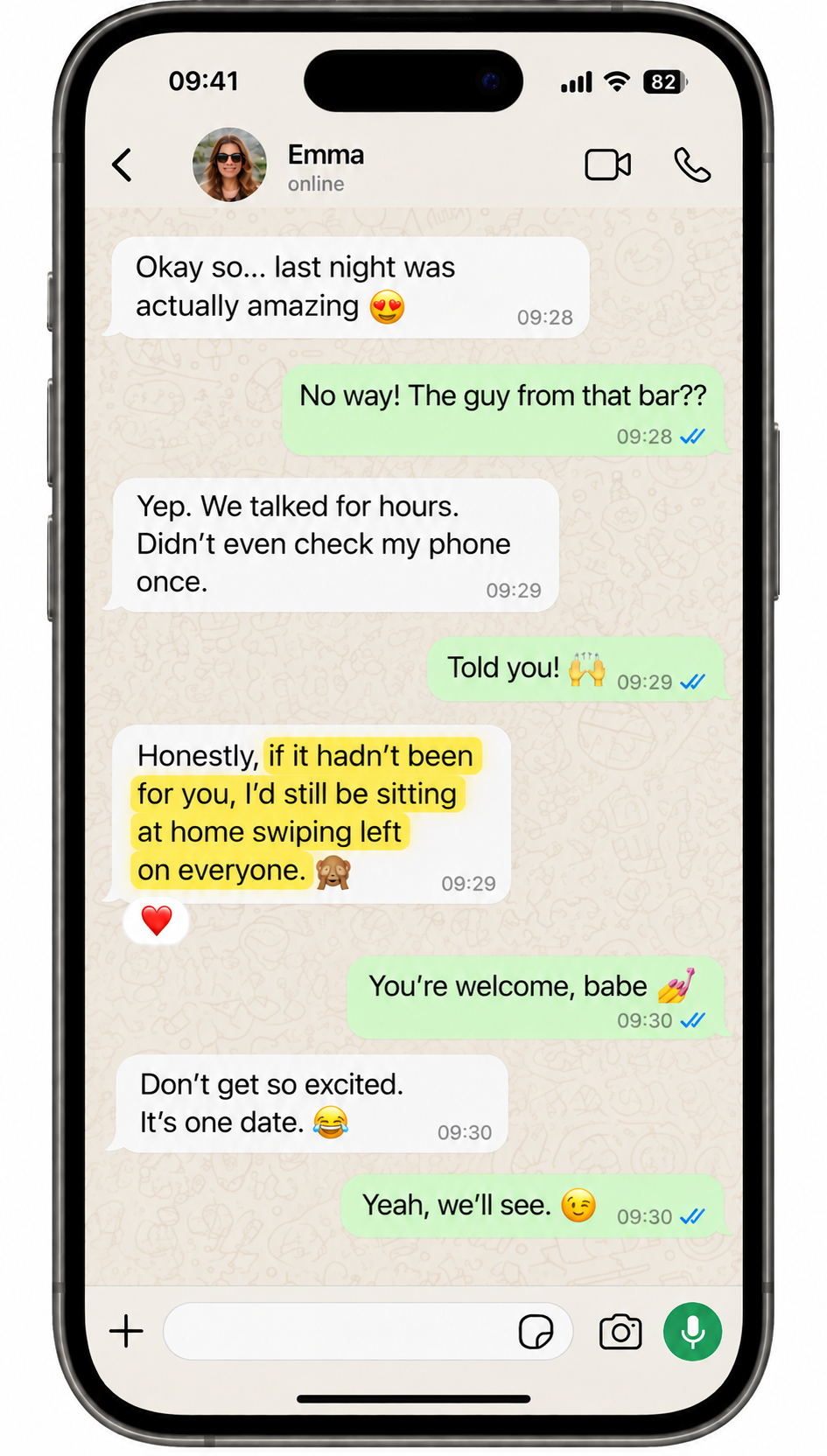
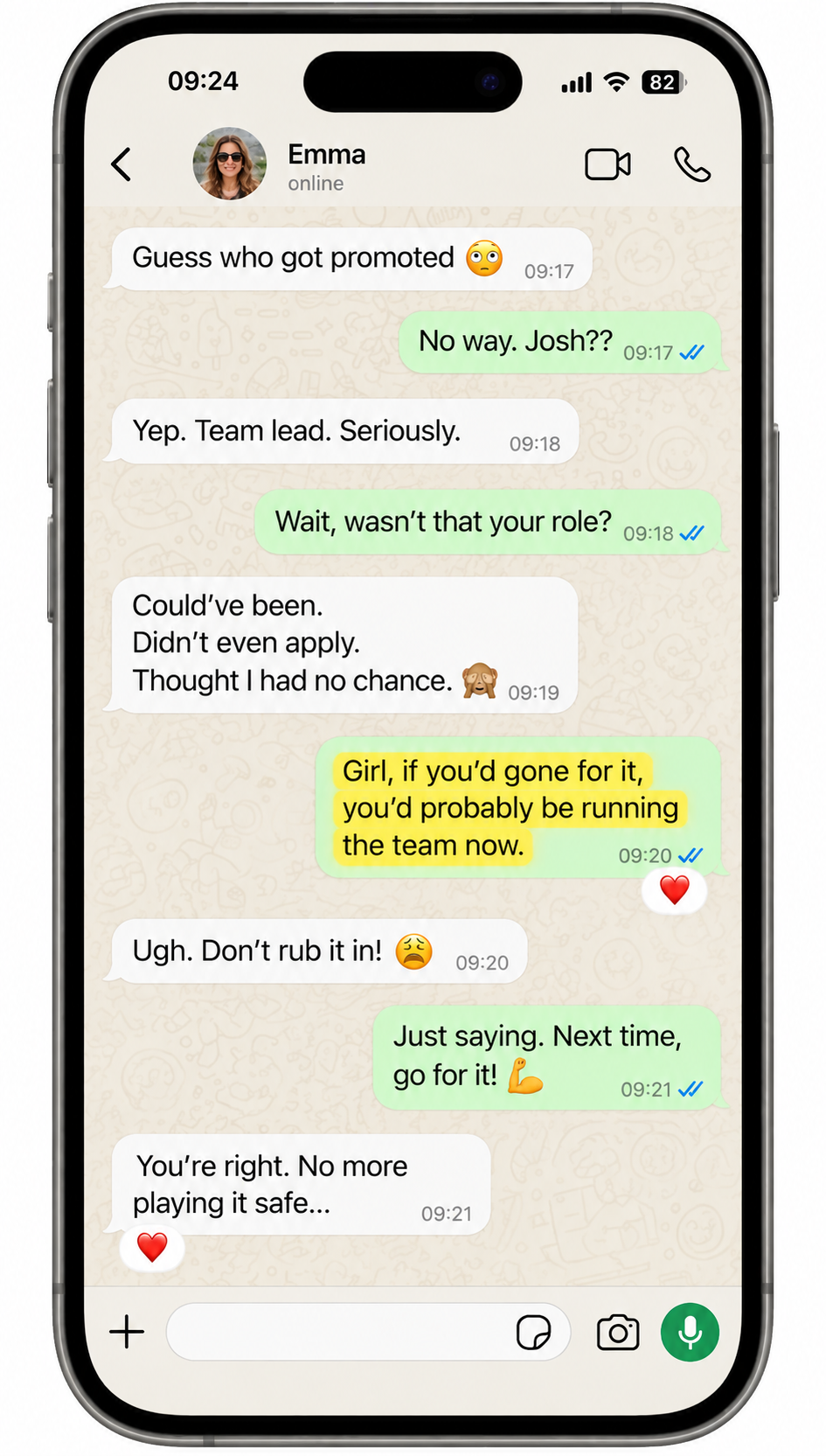
Take a look at these two WhatsApp conversations. Just two friends chatting about everyday life.
🎧 First, listen to both conversations while reading the messages.
You’ll notice that some of the sentences contain conditionals, but they’re a little different from the ones you already know.
But first… a little pronunciation! 🎧
Connected SpeechWhy does English sound so different from the way it’s written?
In everyday conversations, native speakers often link words together and reduce unstressed sounds. This is called connected speech.
would have → would’veTake would have, for example. In fast, natural speech, it usually becomes would’ve, with a very short, weak have.
The same happens with could have, should have, might have and their negative forms.
Full form Natural spoken form would have would’ve could have could’ve should have should’ve might have might’ve wouldn’t have wouldn’t’ve / wouldn’t have couldn’t have couldn’t’ve / couldn’t have shouldn’t have shouldn’t’ve / shouldn’t have Note: In natural speech, the word “have” is often reduced. The exact pronunciation depends on the speaker and how quickly they’re talking.
🎧 Listen & Repeat
Listen to each sentence and repeat it during the pause. Try to copy the speaker’s rhythm, not just the individual sounds.
ROUND 01 Positive forms01 I would’ve gone for it.02 Could’ve been worse!03 You should’ve told me.04 She might’ve changed her mind.ROUND 02 Negative forms05 I wouldn’t have guessed.06 We couldn’t have done it without you.07 You shouldn’t have said that.08 I wouldn’t have bothered.ROUND 03 A little faster!09 I would’ve taken the job if I’d known.10 If it hadn’t been for you, I would’ve given up.11 We wouldn’t have missed the train if we’d left earlier.12 If I’d gone for it, I’d probably be running the team now.ONE LAST THINGWould’ve may sound a little like would of, but it’s always would have, never would of.
Ready? Listen again and see if you can sound a little more natural each time!
Grammar timeLet’s talk about Mixed Conditionals!
You already know the Second and Third Conditionals. But what happens when we want to talk about two different time periods in the same sentence?
That’s where Mixed Conditionals come in! We use them to connect an imaginary past with an imaginary present, or the other way around.
PAST → PRESENTA different past, a different present
If + Past Perfect
→ would + base verbIf I’d applied for the job, I’d be a manager now.
I didn’t apply in the past, so I’m not a manager now.
PRESENT → PASTA different present, a different past
If + Past Simple
→ would have + past participleIf I were more confident, I would’ve applied for the job.
I’m not very confident, so I didn’t apply in the past.
🎬Still a little confused?
Don’t worry! Let’s break it all down together. Watch the video below, where I’ll walk you through Mixed Conditionals step by step, with real-life examples.
Hopefully, it’ll all start to make sense! 😊
BONUS GRAMMAR · FUN FACTIf it weren’t for you…
Still hungry for more? Here’s one more really useful structure you’ll come across all the time!
How do you say „gdyby nie…” in English? When someone or something makes a difference to a situation, we can use if it weren’t for or if it hadn’t been for. The choice depends on whether we’re talking about the present or the past.
SECOND CONDITIONAL · PRESENTIf it weren’t for…
Gdyby nie ktoś lub coś, co ma wpływ na naszą obecną sytuację.
THE REGULAR VERSIONIf you didn’t help me so much, I’d be completely lost.THE ALTERNATIVEIf it weren’t for you, I’d be completely lost.Gdyby nie ty, byłabym kompletnie zagubiona.THIRD CONDITIONAL · PASTIf it hadn’t been for…
Gdyby nie ktoś lub coś, co wpłynęło na sytuację w przeszłości.
THE REGULAR VERSIONIf you hadn’t helped me, I would’ve missed the deadline.THE ALTERNATIVEIf it hadn’t been for you, I would’ve missed the deadline.Gdyby nie ty, nie zdążyłabym przed terminem.ONE MORE THING…And then there’s but for.
There’s an even shorter way to say the same thing: but for + noun / pronoun. It works with both present and past hypothetical situations. You’ll find it more often in formal or written English, although it can appear in speech too.
Time Example Present But for you, I’d be completely lost. = If it weren’t for you…Past But for your help, I would’ve missed the deadline. = If it hadn’t been for your help…Remember: Here, but for doesn’t mean „ale dla”. It means „gdyby nie”.
YOUR FINAL CHALLENGELet’s put it all together!
You’ve covered Second, Third and Mixed Conditionals, plus a few extra expressions along the way. Now it’s time to put everything into practice!
Ready for a challenge? Your virtual English teacher will guide you through translations, real-life situations, mini conversations and grammar challenges. You’ll get feedback after every answer, and the activities will adapt to your level.
⏱ Approximately 35–40 minutes · B2/C1 · At your own pace


Aleksandra Deneka English State, NIP: 6292396171 | Polityka prywatności | Regulamin newslettera